
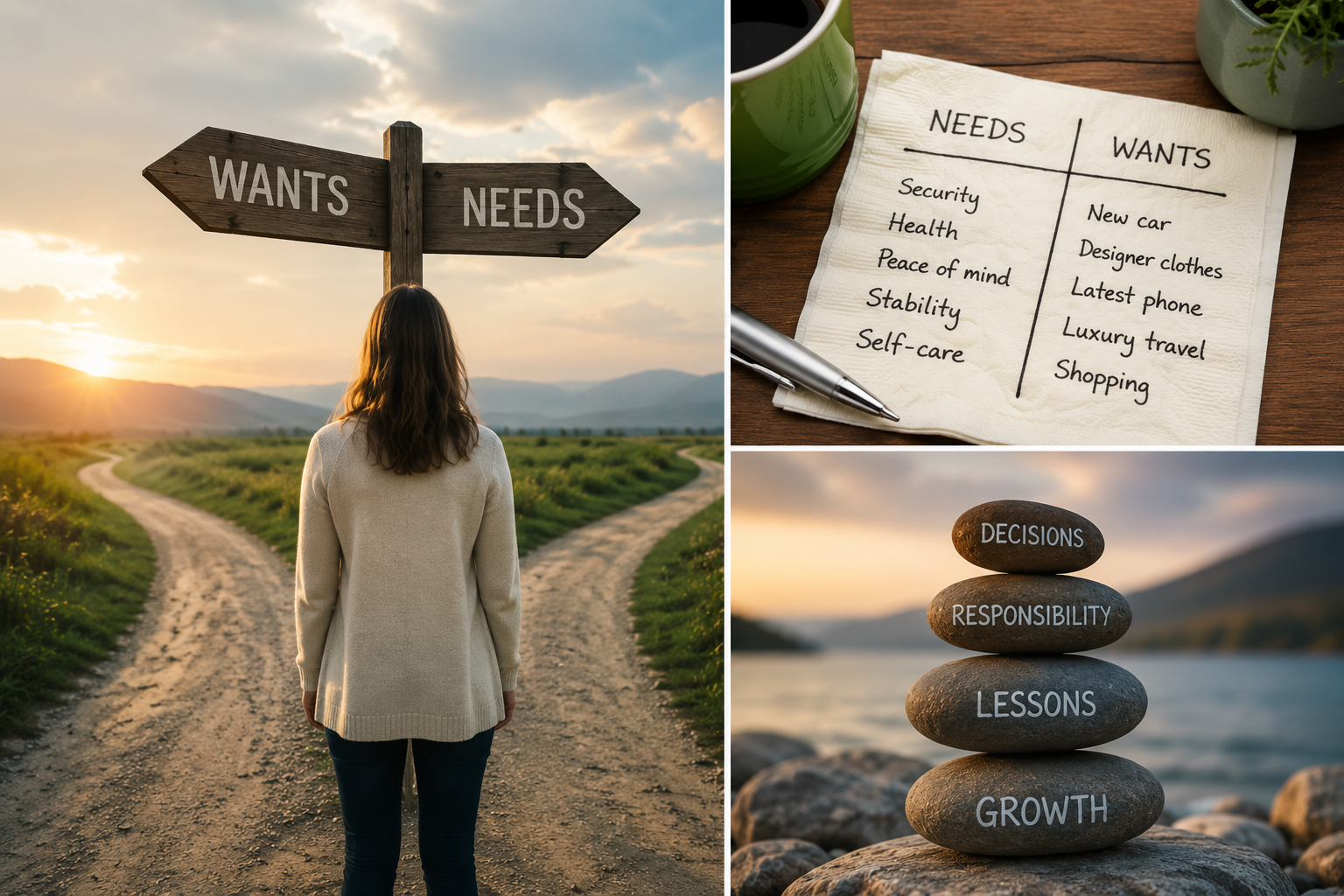
Needs vs Wants: How Your Choices Shape Your Emotional Health and Future
Many of the decisions we make in life are based on either our wants or our needs. The difference between the two can dramatically shape our emotional health, financial stability, relationships, and overall quality of life.
Every choice we make teaches us something.
Life does not operate like a traditional classroom where lessons are taught first and tested later. Instead, life works in reverse. First we make choices, and then life gives us the lesson through the outcome of those choices.
Some people learn from those experiences. Others continue repeating the same painful patterns without recognizing the lesson behind them.
Life Lessons Often Repeat Until We Learn Them
When we ignore emotional patterns, unhealthy habits, or poor decision-making, the same types of situations often continue appearing in our lives.
This can happen financially, emotionally, physically, or within relationships.
Many people become trapped in cycles of:
- Poor financial decisions
- Toxic relationships
- Emotional dependency
- Impulsive behavior
- Avoidance of responsibility
- Instant gratification
- Fear-based decision-making
The good news is that growth is always possible when we become willing to pause, reflect, and choose differently.
Instant Gratification vs Long-Term Emotional and Financial Health
One common example is how people handle money and financial planning.
Some individuals make decisions based entirely on immediate wants and temporary gratification. They spend impulsively, avoid planning for the future, and convince themselves they can always “fix it later.”
Unfortunately, this mindset often leads to debt, stress, instability, and regret.
At some point, many people realize they must begin prioritizing what they truly need instead of only focusing on what they want in the moment.
That shift in thinking can completely change a person’s future.
They may begin:
- Saving for retirement
- Seeking professional guidance
- Learning healthier financial habits
- Taking responsibility for their choices
- Planning for long-term stability
- Developing emotional discipline
Personal growth often begins when we stop making excuses and start taking ownership of our decisions.
Poor Choices Can Create Serious Consequences
Sometimes people make impulsive choices simply because they want convenience, speed, or immediate comfort.
Recently, I observed a situation where someone attempted to climb over a small wall rather than walking a few extra feet to use nearby steps. During the attempt, they began falling backward and nearly suffered a catastrophic injury. Others stepped in to prevent serious harm, yet instead of recognizing the danger they avoided, blame and frustration followed.
The injuries eventually required major surgery and extensive rehabilitation.
What stood out most was not only the accident itself, but the ongoing resistance to accepting the reality of what was truly needed for healing and safety.
This is something many people struggle with emotionally.
Sometimes we focus so heavily on what we want that we ignore what we genuinely need.
Emotional Decision-Making in Relationships
Relationships are another area where people often confuse wants with needs.
Some individuals want a relationship so badly that they ignore warning signs, unhealthy dynamics, or emotional incompatibility. Desperation, loneliness, or fear of being alone can lead people into repeated cycles of pain.
Even when the person changes, the outcome often remains the same because the underlying emotional pattern has not changed.
A healthier relationship usually begins when a person slows down and asks:
- What do I truly need emotionally?
- What behaviors are healthy or unhealthy?
- Am I choosing from fear or self-worth?
- What patterns keep repeating in my relationships?
- What lessons have I ignored?
Self-awareness creates the opportunity for healthier choices and better outcomes.
Personal Responsibility Creates Emotional Healing
Healing often begins with personal responsibility.
That does not mean blaming yourself harshly for every mistake. It means honestly recognizing the choices, behaviors, and emotional patterns that may be contributing to ongoing struggles.
When people refuse to acknowledge unhealthy choices, they often remain emotionally stuck. However, when they become willing to understand the “how,” “why,” and “what” behind their experiences, meaningful change becomes possible.
Slowing down, reflecting carefully, and making thoughtful choices can dramatically improve emotional health, relationships, and quality of life.
Guidance for Emotional Growth and Life Transitions
Sometimes people need help understanding why certain patterns continue repeating in their lives.
Support, guidance, and emotional insight can help individuals develop healthier coping skills, improve decision-making, and create a more balanced emotional path forward.
If you would like help exploring emotional growth, healthier life choices, relationship patterns, or personal healing, visit Susan Anderson Counseling and Guidance to learn more about available sessions and resources.